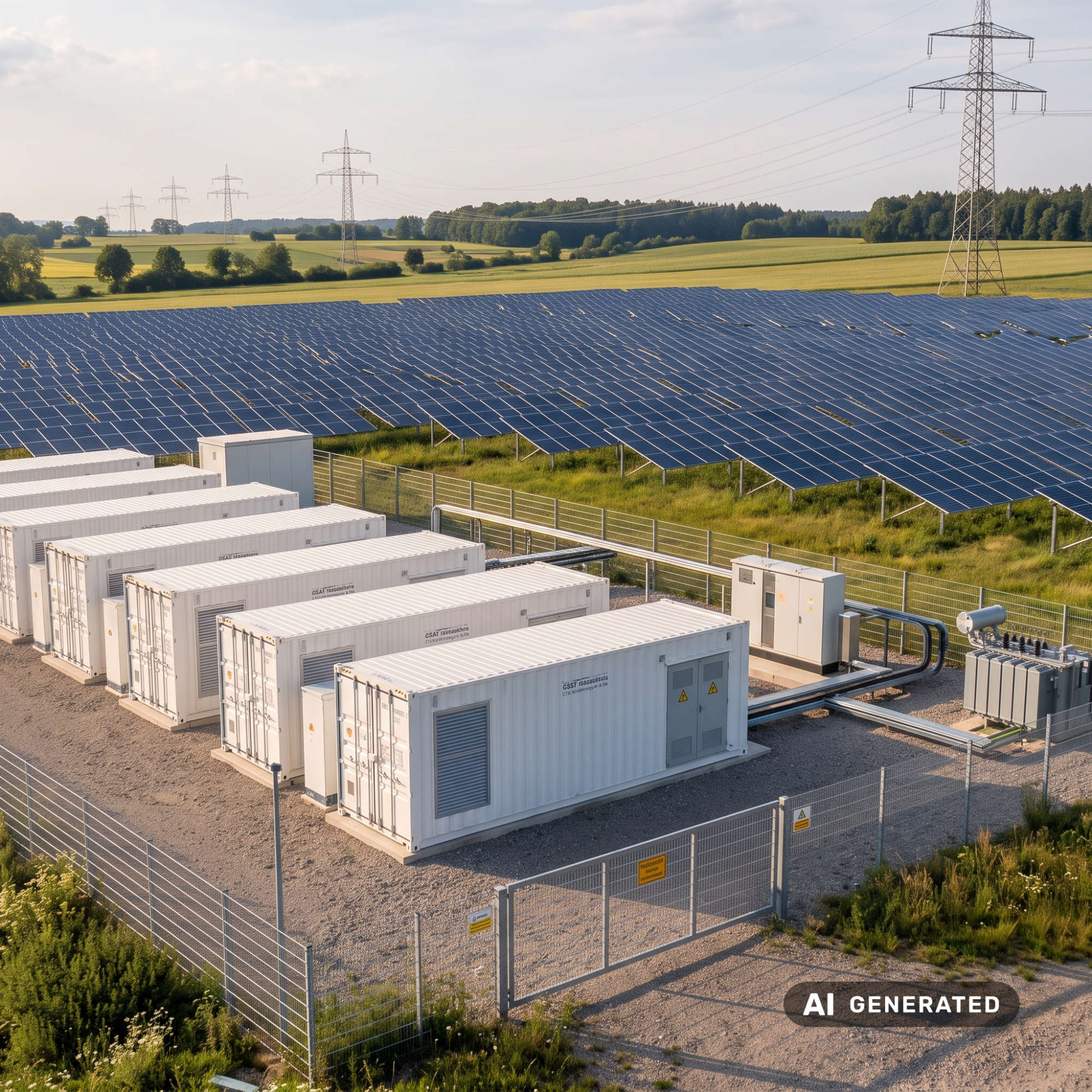
Flexibility is the key commodity in balancing energy marketing. However, our latest analysis of the aFRR-negative power market shows: Flexibility is often not used where it makes the biggest economic difference. Instead, opportunities are systematically missed – due to poorly coordinated bidding strategies, a lack of forecasting capabilities or operational bottlenecks.
Observation: Systematic Price Distortions
Since the end of June, we have observed a conspicuous pattern in the 4-hour time slices from 08:00, 12:00 and 16:00: the lowest bid price remains constant at exactly €5.00/MW/h in each case. This relates to the aFRR-negative power market, i.e. the secondary control power for reducing feed-in or increasing consumption.
Systematic Undercutting in the Morning?
Since June 27, 2025, the lowest bid price in the aFRR power market (negative) – time slice 08:00-12:00 has been constant at € 5.00/MW/h. The market pays significantly more – why is so much left lying around?

Lunchtime = Margin Time – or Not?
Even in the 12:00-16:00 time slot, we regularly observe a price a price minimum of exactly 5.00 €/MW/h. An indication of non-optimized standard bidding strategies.

In the Afternoon we Continue to Fly Low!
The price anomaly continues: In the 16:00-20:00 time slot the pattern is repeated at €5.00/MW/h. Flexibility is there – but is not strategically priced.

Background: Pay-as-bid Principle Determines Margin
In the aFRR service market, remuneration is based on the pay-as-bid principle, which means that those who bid low are often awarded contracts, but systematically give away revenue potential. This is because even if the market is prepared to pay significantly more, the provider only receives the price they bid.
Wasted Revenue: Up to €50,000/MW With the Wrong Bidding Strategy
Our analysis shows that the average market price is between €20 and €60/MW/h: In the affected time slices, the average market prices are between €20 and €60/MW/h. Suppliers who operate at a constant €5/MW/h forgo up to €55/MW/h, depending on the market situation. Extrapolated, this results in a monthly revenue gap of around €5,000 to €20,000 per megawatt of installed flexibility.
A recent analysis by a specific market participant even shows that at least €31,427/MW was given away between 27 June and 15 July alone. This figure is based on a comparison with the 25th percentile instead of a constant bid of €5. If the trend continues, the participant in question would have given away around €51,276/MW in potential revenue for the whole of July.

Cause: Standardized Bidding Logic
TThere are many reasons for these suboptimal results, but they are often due to a lack of market knowledge, a lack of forecasting models or insufficient operational resources. In many cases, too simple, standardised bidding strategies are used that do not react to the dynamics of the electricity market.
Conclusion: Markets are There. So are Revenues. But Not Without a Strategy.
Technology alone is not enough. If you want to market flexibility successfully, you need a sound understanding of the market, powerful algorithms, precise forecasts and operational excellence.
We support companies in unlocking the full potential of their investments on all relevant short-term markets – with data-driven trading optimisation, cross-market strategies and personal support. Please feel free to contact us.