If we look at the raw numbers for 2025, one thing becomes clear very quickly for flexibility trading: this was not a “one-off year.” What we’ve seen over the past twelve months is the confirmation of a trend that had been building for some time, but is now hitting balance sheets with full force. Anyone who expected the markets to simply “calm down” after the 2022/23 energy crisis and return to business as usual is probably rubbing their eyes by now. The calm hasn’t returned. And for everyone who has flexibility in their portfolio, that may well be the best news of the year.
The renaissance of balancing power (and the rise of aFRR)
Let’s be honest: for a long time, automatic Frequency Restoration Reserve (aFRR) was seen as the less glamorous sibling of Frequency Containment Reserve (FCR). But 2025 has shaken up that relationship. After the brief price softening in the post-crisis period, we might have expected stagnation. Instead, our data shows positive momentum across all balancing markets.
The real standout, however, has been aFRR. It has increased significantly. When we look at rolling annual revenues, the aFRR curve almost jumps upward, while other markets remain more sideways.
 For us at Entelios, that’s a clear signal: trading and dispatch in balancing markets is shifting. It’s no longer enough to “park” flexibility in a single market. If you want to maximise revenues today, you need to shift dynamically. Germany’s Bundesnetzagentur also notes in its latest 2025 market reporting that the need for system interventions remains high and flexibility is increasingly becoming system-critical. That helps explain the continued resilience of revenues in these markets.
Volatility beats price level: the 138% phenomenon
Now it gets especially interesting for the analysts among us. We often stare at the absolute power price in euros per MWh like a rabbit at a snake. But the real magic happens elsewhere: in the spread.
Our analysis shows that in 2025 the average price increased slightly to €89/MWh (from €79/MWh the year before). But that’s not the decisive metric. Much more important is the spread-to-price ratio. In 2025 it came in at a hefty 138%.
What does that mean in plain terms? Volatility relative to the overall price level remains extremely high. For a pure consumer with no control options, that’s annoying, perhaps even threatening. But for flexibility trading? It’s music to the ears. A high spread means the value of flexibility rises, regardless of whether power is generally cheap or expensive. The difference is what creates profit.
 This confirms again what we see in practice: optimising energy costs for production sites no longer works through purchasing alone, but through intelligent management of these fluctuations.
576 hours below zero: a new record with notice
Remember July 2025? It was notably low on sunshine. You might think that would reduce the number of negative price periods, because less PV would be pushing into the grid. Not at all.
In fact, 2025 marked the fourth consecutive year with a new record of negative prices in short-term trading. Prices were below zero for 576 hours. For comparison, in 2022 it was still a manageable 69 hours. That’s an eightfold increase in just three years.

Let that sink in. Instead of treating these hours as a risk, we should see them as an invitation. Negative-price windows offer enormous potential to optimise procurement costs. For anyone looking to run industrial assets more efficiently while also saving money, these time slots are ideal. But you have to catch them. Manually, that’s barely feasible anymore. You need automated load control and algorithms that move faster than the market.
This dynamic is also supported by Fraunhofer ISE’s latest annual assessment: with yet another record build-out of PV and wind in 2025, price swings now correlate almost one-to-one with weather patterns. That’s a perfect setup for anyone who can steer loads intelligently.
The attractiveness of intraday trading keeps rising
Another trend we’ve been observing for years: the action is increasingly happening closer to delivery. We see a slight shift of volumes away from the day-ahead auction and into continuous intraday trading.
Trading volumes there are growing steadily. That’s good, because rising volume improves market liquidity. For us, this means opportunities in intraday optimisation aren’t disappearing. They’re becoming more tangible. If you operate with Cross-Market-Optimisation, shifting flexibility rapidly between day-ahead, intraday and balancing markets, you can convert that liquidity directly into additional revenues for utilities or industrial companies.
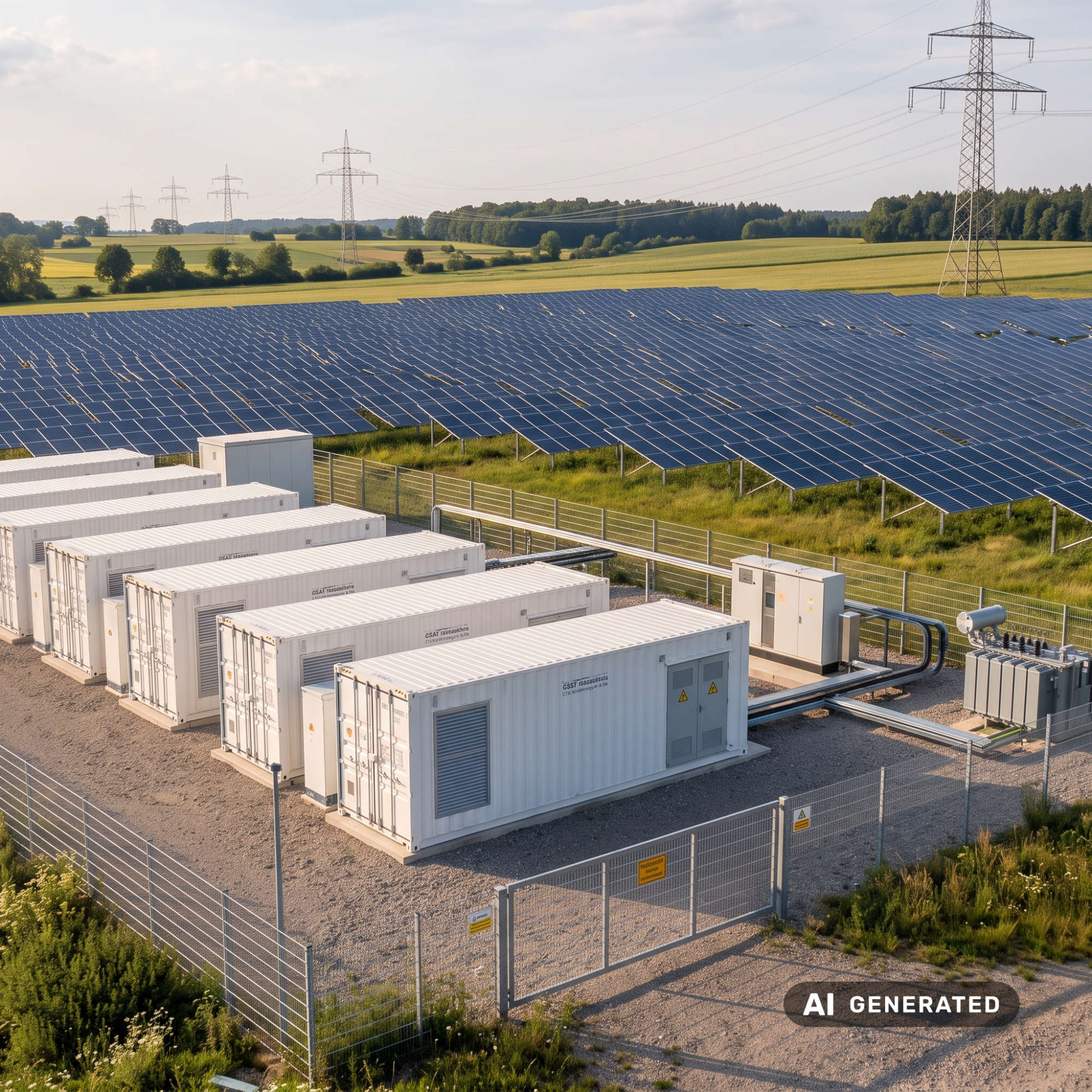
This development is particularly valuable for battery storage in intraday trading. Batteries are, by definition, the speedboats of the power system. When the market is liquid and prices jump (hello again, volatility), batteries are in their element.
Noch so ein Trend, den wir schon seit einigen Jahren beobachten: Die Musik spielt immer öfter kurz vor knapp. Wir beobachten eine leichte Verlagerung der Mengen aus der Day-Ahead-Auktion in den kontinuierlichen Intraday-Handel.

Conclusion: embrace complexity rather than oversimplify
Looking at 2025, the message is pretty clear: the era of simple solutions is over, and that’s a good thing. The market now rewards those who can handle complexity.
It’s no longer enough to focus on a single market. The craft, and yes, I’m deliberately calling it a craft even though there’s a lot of mathematics behind it, lies in Cross-Market-Optimisation. You have to use industrial load flexibility precisely when spreads are largest, and perhaps an hour later be available again in the aFRR market because prices are suddenly surging there.
At Entelios, we see ourselves not only as a service provider, but as navigators through this increasingly wild jungle. The 2025 data confirms we’re on the right course: those who stay flexible win. Not despite volatility, but because of it.
Would you like to find out how much untapped potential is hidden in your assets or storage systems when benchmarked against these market dynamics? Let’s analyse your load profiles with no obligation.